If water is dripping from the ceiling after rain, do these five things first: put a bucket under it, poke a small hole in any ceiling bulge so the water drains instead of collapsing the drywall, move furniture and electronics, photograph everything, and call for an inspection while the evidence is fresh. Then find the source, which is rarely directly above the drip.
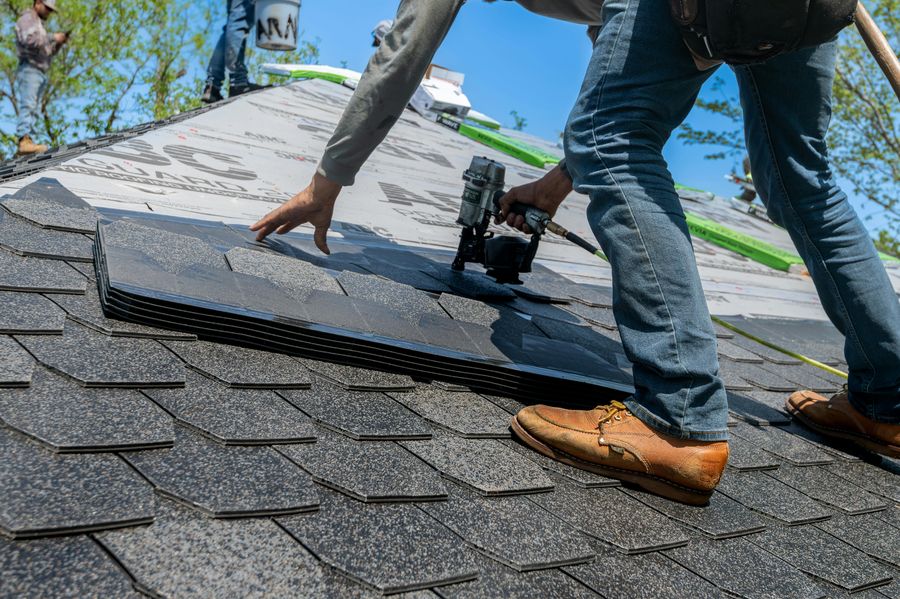
Water enters at a flashing, a vent boot, a valley or a lifted shingle, runs down the underside of the roof deck or along a rafter, and drops onto the ceiling wherever it finds a low point. The stain can be ten feet from the entry. That is why patching the shingles above the stain so often fails.
The common entry points in our market: cracked rubber boots around plumbing vents, flashing at chimneys and sidewalls, valleys packed with debris, nail pops on older roofs, and wind lifted shingles after a storm. Ice dams cause the same drip in late winter and the fix is different, which our ice dam guide covers.
A single failed boot or flashing is a repair, typically in the $300 to $1,000 range. Multiple entry points on a roof near the end of its life, or wet decking over a wide area, is when replacement stops being optional. If a storm caused it, we photograph and document the damage so you have a clear record; your insurer and agent handle the claim itself.
The free inspection includes a written summary of what failed, what it takes to fix, and what it costs. No pressure to replace when a repair will hold.
A free estimate gets you exact numbers, real samples and an honest recommendation from a veteran owned local contractor.
Prefer to pick a time? Book your free inspection online