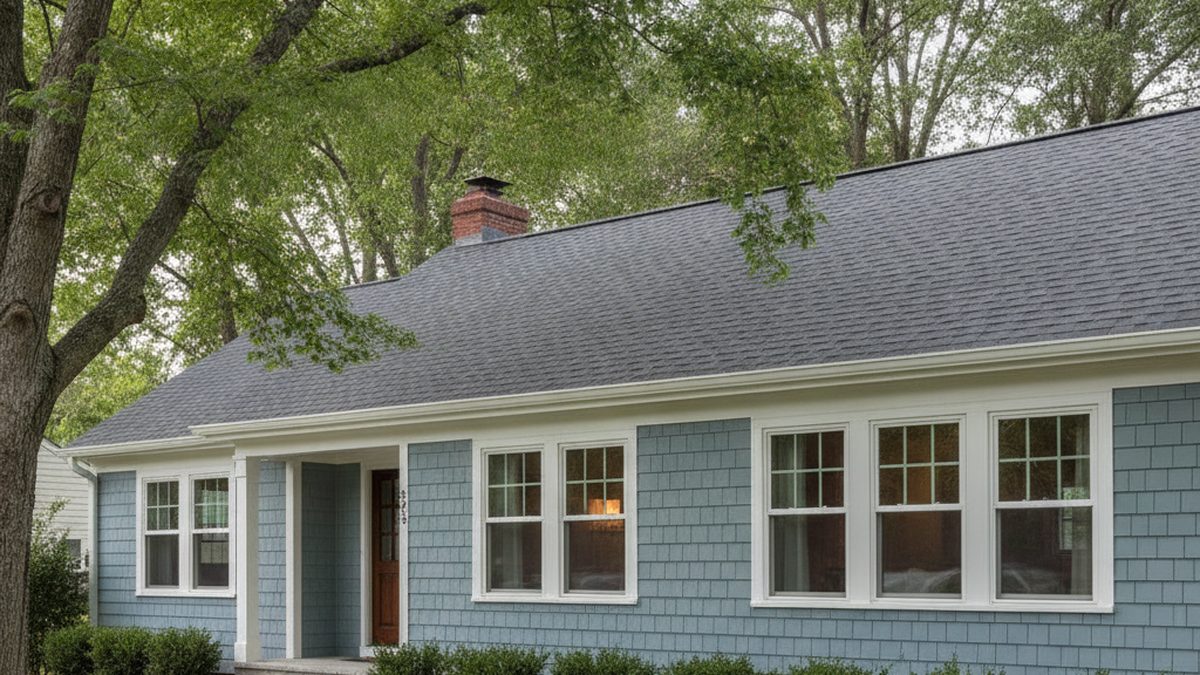
Drafty windows letting cold air in winter?
Drafty windows in winter usually mean failed weatherstripping, a broken sash seal, or gaps where the window frame meets the wall, not necessarily a window that needs replacing. The U.S. Department of Energy reports that heat gain and loss through windows account for 25% to 30% of residential heating and cooling energy use, so leaks show up quickly on a January bill. Find the source before deciding: on a cold day, hold a lit incense stick or a damp hand along the sash, the lock rail, and the bottom of the trim. Air moving at the perimeter of the frame points to failed caulk or missing insulation in the rough opening, which is a repair. Cold glass with no moving air points to a failed insulated glass unit, where the seal between panes has broken. Freedom Exteriors inspects windows with its own crews and will tell you which of the two you have. Interior storm panels or new weatherstripping often fix drafts for a fraction of replacement cost.
Energy efficient window replacement cost per window?
Most energy efficient replacement windows cost roughly $650 to $1,200 per window installed, and large picture, bay, or specialty shapes commonly run $1,500 or more. Four things move that number: frame material (vinyl is the least expensive, fiberglass and wood clad cost more), glass package (triple pane with two low emissivity coatings and argon or krypton fill adds about $100 to $250 per opening), size, and whether the existing opening needs rot repair or new trim. Insert windows, which reuse a sound existing frame, cost less than full frame replacement, which removes the frame down to the rough opening. ENERGY STAR Version 7.0 requires a U factor of 0.22 or lower for windows in the Northern climate zone, which covers Minnesota and Wisconsin, so ask for the NFRC label numbers on any quote rather than a general efficiency claim. Freedom Exteriors installs with its own crews, so the same team measures, orders, and sets each unit.
Should I seal or replace drafty windows letting cold air in during winter?
Cheap weekend fixes such as rope caulk, shrink film kits and new weatherstripping stop drafts for one winter, while replacing a failed window ends them for good at $450 to $900 for a vinyl double hung, according to Freedom Exteriors' published price table. To find the leak, move a lit incense stick around the sash and frame on a windy day; wherever the smoke bends, air is getting in. Close every sash lock first, since it pulls the sashes tight against the weatherstrip. Recaulk the gap between frame and siding in fall, because most caulk manufacturers' specifications call for application above 40°F. Insulated curtains hung close to the glass add a layer at night. The Department of Energy attributes 25 to 30 percent of residential heating and cooling energy use to heat gain and loss through windows. Replacement makes sense when glass fogs between panes, sills feel soft, or drafts return after sealing. Casements at $500 to $1,100 seal tighter than sliding sashes, and triple pane units run $700 to $1,400. Freedom Exteriors gives free estimates and installs with its own crews.
What does energy efficient window replacement cost per window by window type?
Window replacement in Minnesota and Wisconsin typically runs $450 to $1,200 per window installed, according to Freedom Exteriors' published price table, with vinyl double hung units at $450 to $900 and casements at $500 to $1,100. The energy efficient tier is triple pane, at $700 to $1,400 per window. Bay or bow windows form a separate tier at $1,800 to $4,500 each. Several things move a window within its range: the glass package, the size and shape of the opening, the frame material, whether you choose a quicker insert install or a full frame install that addresses rot or sizing, and interior and exterior trim work. Pricing per window also improves as the count goes up across a whole home project. Triple pane glass with low e coatings costs more but cuts heat loss in northern winters, which explains the higher tier, and a rating for the ENERGY STAR northern zone is worth looking for. Standard sizes keep a quote near the bottom of each range, while custom shapes and full frame work push it toward the top. The company's own crews do the installation, and estimates are free.